This is an extraordinary time, an unusual era, where the living history and message We Are Not Your Soldiers brings to the classrooms has a special resonance with the students. We’re raising issues and thoughts that are making what are becoming obvious connections with their lives. They’re seeing in living color imperial criminality in Gaza, in the waters of the Caribbean and they’re seeing it and feeling it up close as friends and family fear round-ups by ICE, the National Guard has been called into various U.S. cities and all are feeling/fearing the cuts to already minimal social services and funding. We enter the schools with increased enthusiasm and are met with the same.
We got going in October zooming in to a NYC middle school class. We don’t often go to middle schools but these students were well-prepared. Their questions for and discussion with Joy Damiani was not far off from that of high school and even some college students. We were impressed!
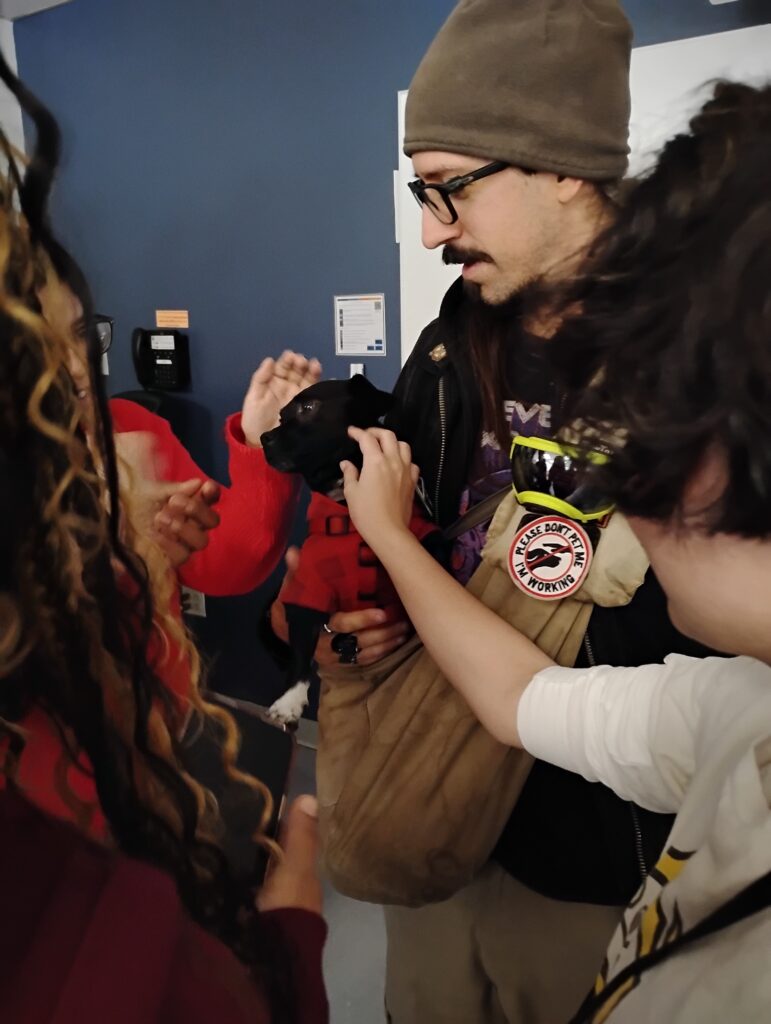
And then, November has been non-stop! John Burns came into NYC for the week, along with his service dog Happy, going to four different colleges. We started at a community college in Manhattan, receiving evaluations from many of the students in the three classes where John presented. One student wrote,
My takeaway from the presentation we had in class was that the military is extremely melancholy. It’s not the high and mighty, action packed thing people believe it is. Our presenter’s demeanor seemed like recalling his memories were dreadful, however he was attempting to be in good spirits. I guess in a way, life goes on and all you can do is tell your story and hope there’s a takeaway for the listeners.
One of the most interesting things to me was the pamphlet that was passed out during class. The statistics on homeless veterans, PTSD, and sexual assault were beyond saddening. It enforced the idea that people serve this country but this country doesn’t serve its people. I feel like I hear so much on social media about the military supposedly making people feel patriotic, but when you get really personal and hear the stories and watch the videos of active combat, you just feel awful. The U.S. empowers its people and tells us that we are the safest country with the largest military but being the largest and most advanced military doesn’t change the fact that we are inserting ourselves into different countries and causing unnecessary conflict.
Read excerpts from other students here on our site.
Next we visited two public colleges, one in Brooklyn and the other in Manhattan, speaking to four classes in total. See this transcript of the discussion in one of the classes following the viewing of “Collateral Murder.”
STUDENT RESPONSE TO Collateral Murder VIDEO: I think it’s sad. I feel like when I was watching the video those emotions of eagerness or happiness must have been created during training to get those responses out of you. It’s like having you go outside of yourself, I guess, in a sense. They brainwash you to view those things, they work on your emotions, developing a particular response, so some people who are, I guess, less strong-willed or have a weaker mind are more susceptible to it. So it’s just sad.
JOHN: Well, it’s funny you mention that. The idea that, if your mind is strong enough, that you’re good, essentially not be brainwashed, but you gotta remember the idea of group think, right? When you’re surrounded with these types of people, day in and day out, your perspective on things changes. So, like, I didn’t think that I was doing anything wrong when I first started going through. But as you start, from the very beginning, from just basic training, like, you’re taught that violence is acceptable, and that you should always be willing to go and commit violence.
One of the ways that they really reinforce that is they don’t say it on paper that they do this, but through word of mouth, will tell you to basically use terms like hajis, or towel heads, or even sand N-word, stuff like that. It’s encouraged to dehumanize these people. They’re not people, they’re terrorists, they’re enemy combatants, right? That’s the beginning of it, and then as you go through training, one of the courses they make you do is full battle rattle, that’s basically your bulletproof vests, your Kevlar, your full loadout, your M16, but you have a bayonet, fashioned to the end of your M16, which we haven’t used for decades. And the reason there’s a bayonet on the end is because at the end of this course, it’s a long course, when you get to the end, there’s a human dummy at the end, and you have to stab it repeatedly with your M16 and yell at the top of your lungs, kill, kill, kill. And if your drill sergeant doesn’t like the way you did it, or you didn’t show enough enthusiasm, he’s gonna make you redo the whole thing.
So it’s that sense of just pure aggression. It is constantly reinforced.
The week concluded with a presentation at a private college on Long Island from which we share a student comment (others available here):
I am grateful you brought awareness of what goes on in the Army because I really didn’t know this stuff. With your trauma, you are helping others.
The following week, Rosa del Duca, zoomed in to share her experiences in the National Guard and discuss with NYC students in a Manhattan public college class how the Guard is being used today by the Trump administration.
Then John Burns returned via Zoom to speak with three NC community college classes. The professor forwarded us this message received from one of the students:
Thank you for setting up that powerful presentation today. I have a long military history within my family. I found that the time passed too quickly. It was very informative and eye opening and I see that so many veterans share the same experiences. I thoroughly enjoyed the break from the on-line learning and the group setting. I lost my father, who served in Vietnam, to ALS from exposure to Agent Orange and negligence from the VA facility he was being treated at. This presentation was possibly my favorite part of the semester for me.
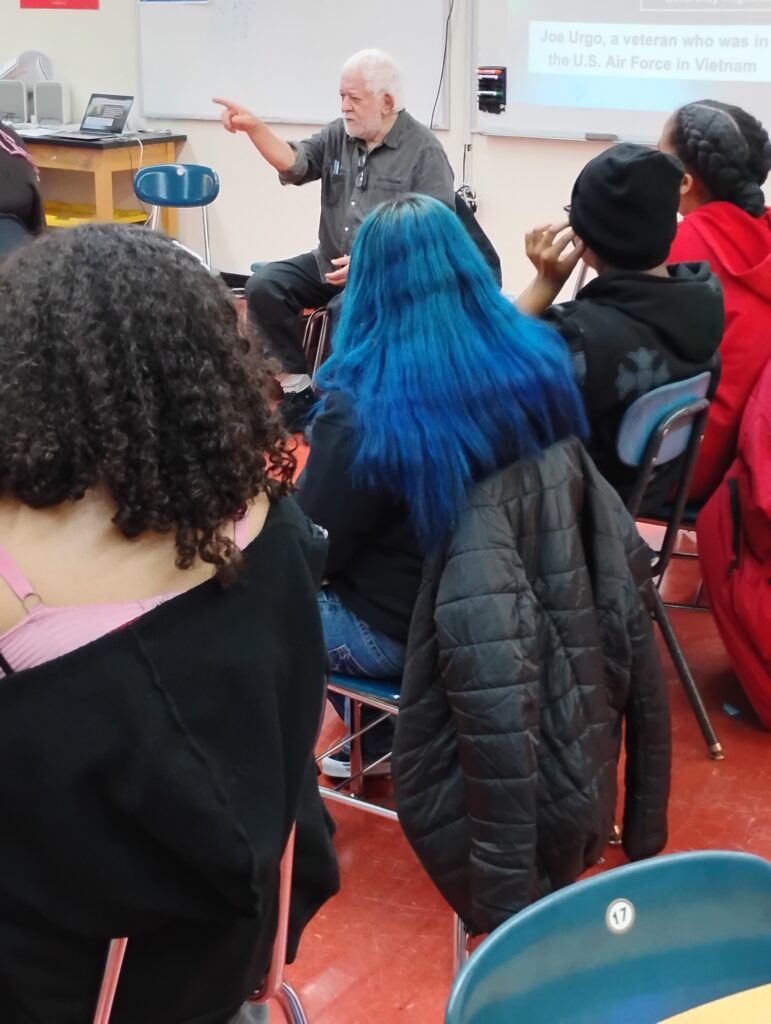
The week concluded at a high school in the Bronx where Joe Urgo presented to four classes. The teacher sent this note the next day:
I deeply appreciate the work Joe is doing. He is saving lives. His work speaking to students is heroic and vitally important. Thank you for your service!
The following week Brian Teucke spent the day in NYC presenting to two more classes at a public college we had visited previously with three other classes.
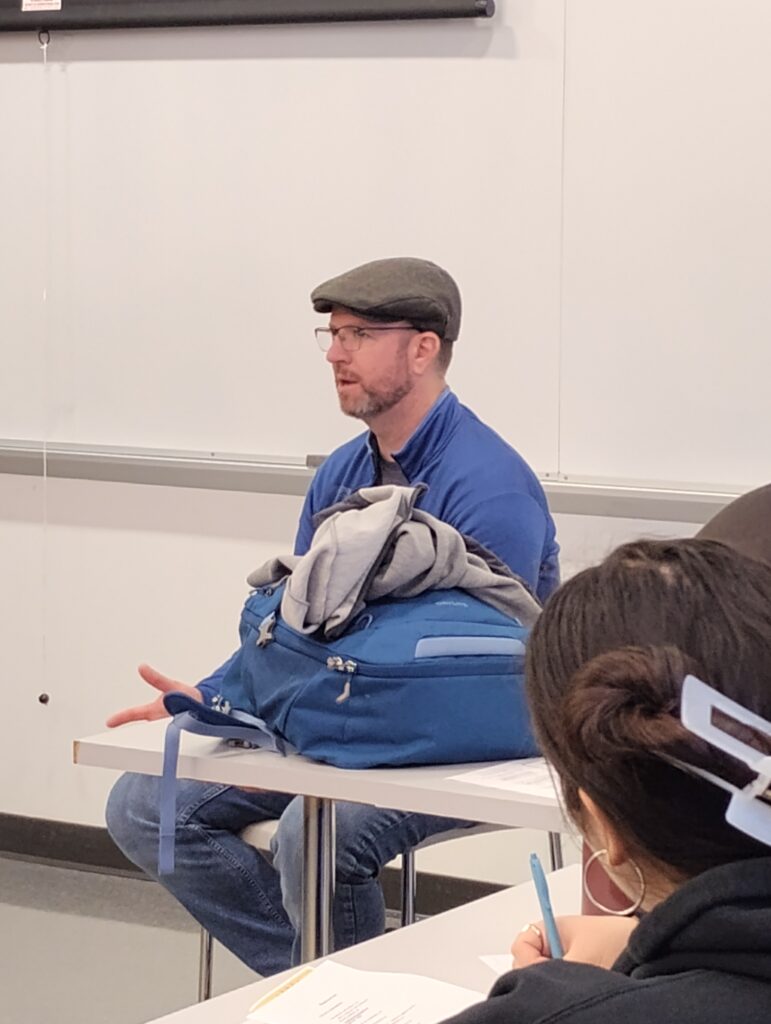
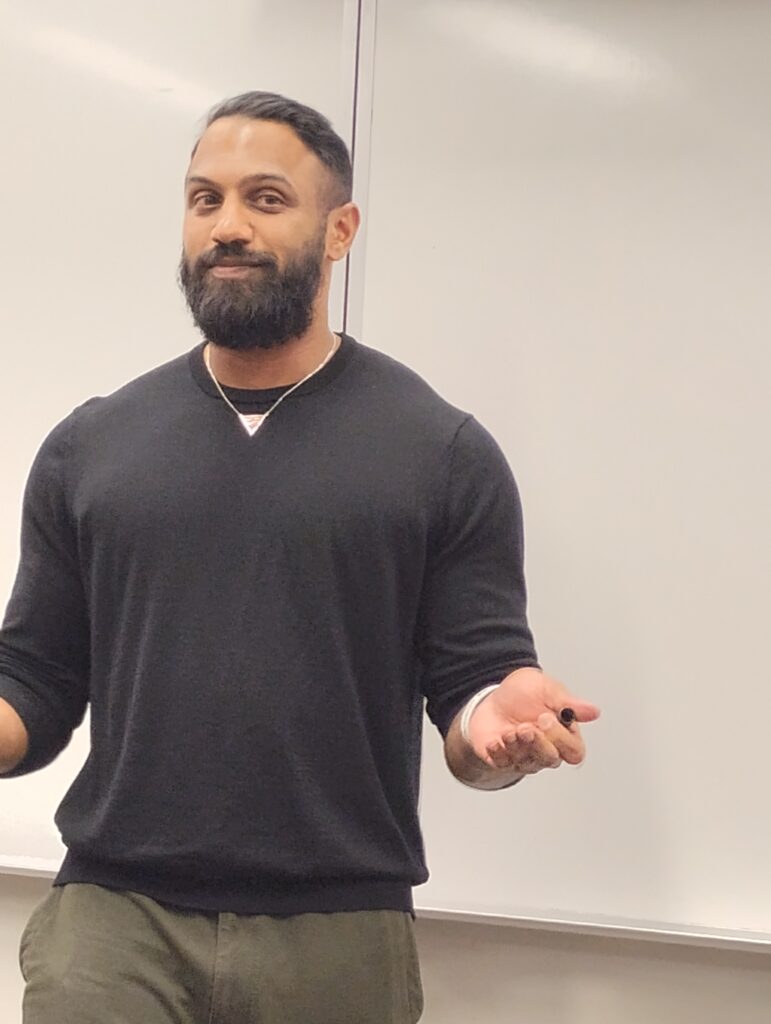
Our next stop was to a private college where Joe Urgo spoke to a class. The following and last week of November, Shaniyat Turani-Chowdhury, at another Manhattan public college, engaged in a lively discussion with a student club with special interest in the Middle East.
It is only with your support that We Are Not Your Soldiers can continue this important work of outreach to so many students, to help develop their growing consciousness by helping them to understand, through primary sources, the history of this country and its relationship to the rest of the world, and to begin thinking about what they can do to reverse the disastrous trends affecting our planet and create a better world for their and future generations.
Let’s finish up our 2025 fund and soon move on to our new fund for 2026. We have several colleges and a high school visit this month of December. And… we already have invitations reaching through April 2026 without having even started outreach for the spring semester!