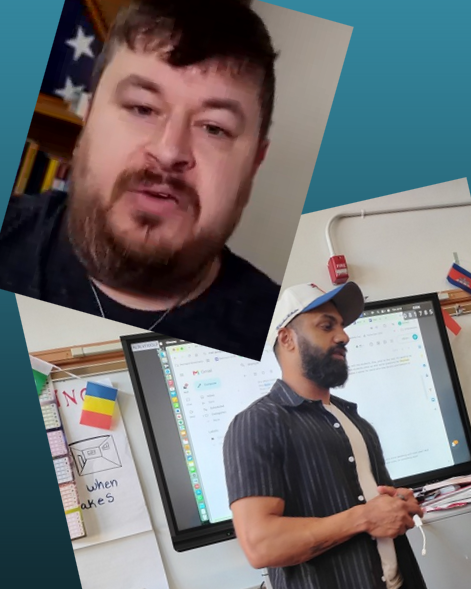
We finished out the 2025-26 school year with two NYC visits: the first was via Zoom to a community college class while the second was in person to a school that ranged from middle school through high school.
Chris “Henri” Henrikson spoke with students, including several veterans, in the college class. See Henri’s presentation in the video above. The Navy veteran raised the subject of violence in the military against women. He spoke specifically about the Vanessa Guillen case as well as the case of another woman. He wondered if this was more prevalent in the Army than the Navy. He went on to question the reporting process in the military and the issues involved in going through the chain of command due to people wanting to protect their positions and the difference between restrictive and non-restrictive reporting.
Another student, an Army veteran, also spoke saying, “I’m sure when you went in you went in with the best intentions for doing the best things for everyone. I appreciate more so the kindness in your heart than anything else. And, I agree with you on quite a bit of what you said.” He felt responsibility ultimately lies with “the people who invest financially and members of Congress or government that push these initiatives and create the narrative through film and media. They create the whole basis for it. And soldiers and oftentimes even the people in the chain of command have very little to do after those decisions are made other than to follow orders themselves.”
Another student asked Henri for his take on “families pressuring their children to join the military to gain their citizenship.”
Among the comments received on our evaluation forms were the two that follow:
I enjoyed how the speaker didn’t attempt to sugarcoat what the military is like and what led him to join besides just poverty.
I liked how in-depth Henri’s responses were to the class’s questions. I was not aware of what he mentioned prior to the presentation and now realize that those soldiers often feel helpless but forced to commit inhumane acts. To stop wars we can take a step back and listen to citizens to see how they feel about wars as well as the reasons for them (oil, political “freedom,” etc.).

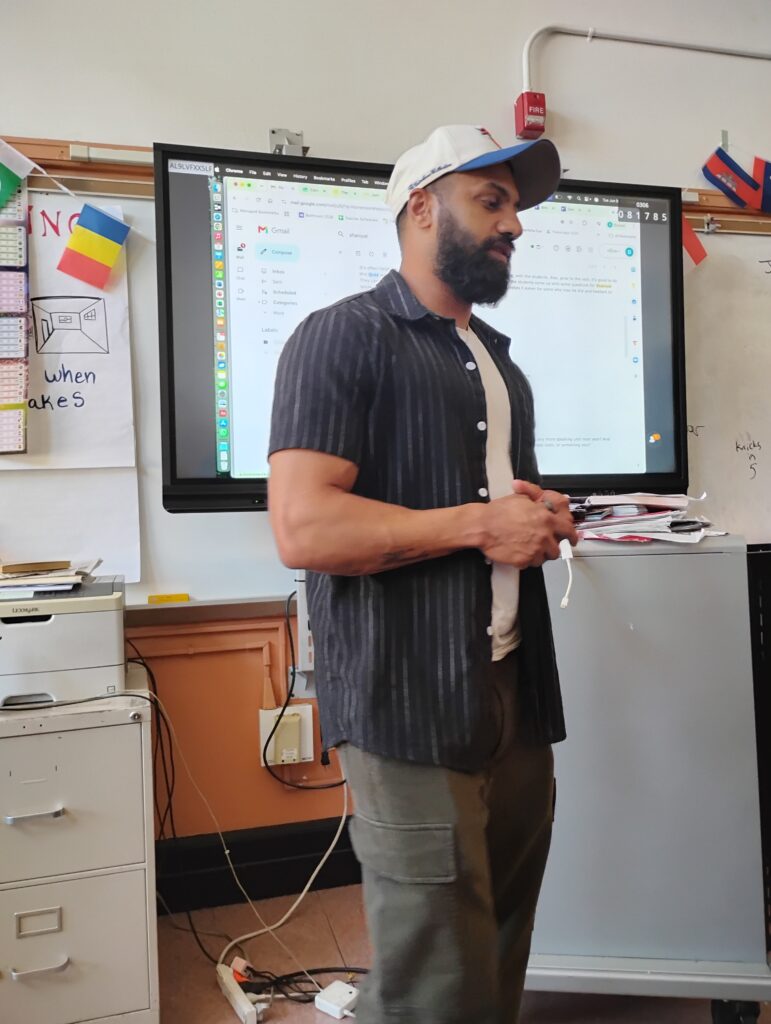
Shaniyat speaks with students being recruited by the military
We had been invited to this local NYC middle through high school due to concerns from the teachers who had been distressed by the number of military recruiters on the campus over the last year, giving students misinformation (“there is no way to pay for college other than to join the Army,” etc.). Shaniyat Turani-Chowdhury presented to a group of seniors who had been approached by the recruiters and were considering the option of enlisting. They were eager to hear another perspective and had lots of questions with a lively discussion. Several stayed after class to delve deeper and get more information. In the afternoon, Shaniyat presented to a class of middle-schoolers who were just becoming aware of the recruiters around their school and the related issues.